This website uses cookies to analyze traffic.
By clicking “I agree” you consent to the processing.
Do you want to train with us? Do you want to race with us?
Don't hesitate to contact us.
Matej Matúš: From Bodybuilder to Extreme Triathlete. When the body screams “I’m done”, the mind replies “Not yet”.
📅 7. 10. 2025✍️ MAMA3 Club
From lifting weights and building muscles to pushing his limits in extreme triathlons.
Matej Matúš speaks openly about how a man who once hated running and saw cycling only as a way to burn fat became a participant in some of the toughest Ironman races in the world.
He talks about the loneliness on the course, the moments when he wanted to give up, his comeback after an injury, and why extreme triathlon is more than just a sport for him — it’s a way of life, mental therapy, and a lesson in humility.
Matej, how did your journey begin?
The beginnings were quite interesting — I was into bodybuilding, didn’t swim at all (unless you count lazy summer lounging by the lake), saw the bike merely as a tool for burning fat, and considered running something that would destroy my hard-earned muscle mass.
Why were you drawn to extreme Ironman races from the very beginning instead of the classic Ironman events?
The main reason was, and still is, that I’d feel ashamed if I had to walk during the running part of a classic IRONMAN race. In an extreme triathlon, however, walking is sometimes a necessity — and that’s what keeps me in this category.
What’s the biggest attraction of these races for you?
What I enjoy the most is the solitude. It’s strange, because in such a race you need a team of people around you who take care of your comfort — from oiling you up before putting on the wetsuit to helping you with your socks or tying your shoelaces when your hands are numb. But once you’re on the course, you’re completely alone, fighting for yourself and your belief that the finish line isn’t as far away as it seems to most people on this planet.
I’ll quote an amazing athlete, Róbert Žajdlík: “It’s an incredible form of mental hygiene.” That’s exactly why I love it — you’re surrounded by people who are genuinely human, tuned in to your performance, willing to stay awake, skip meals, sit for hours in a car, always ready to help — and in the end, they even run the final stretch with you.
Race experiences?
Ohhh, there are sooo many of them 😊 … enough for a whole separate article!
Which of all your extreme Ironman races was the toughest, and why?
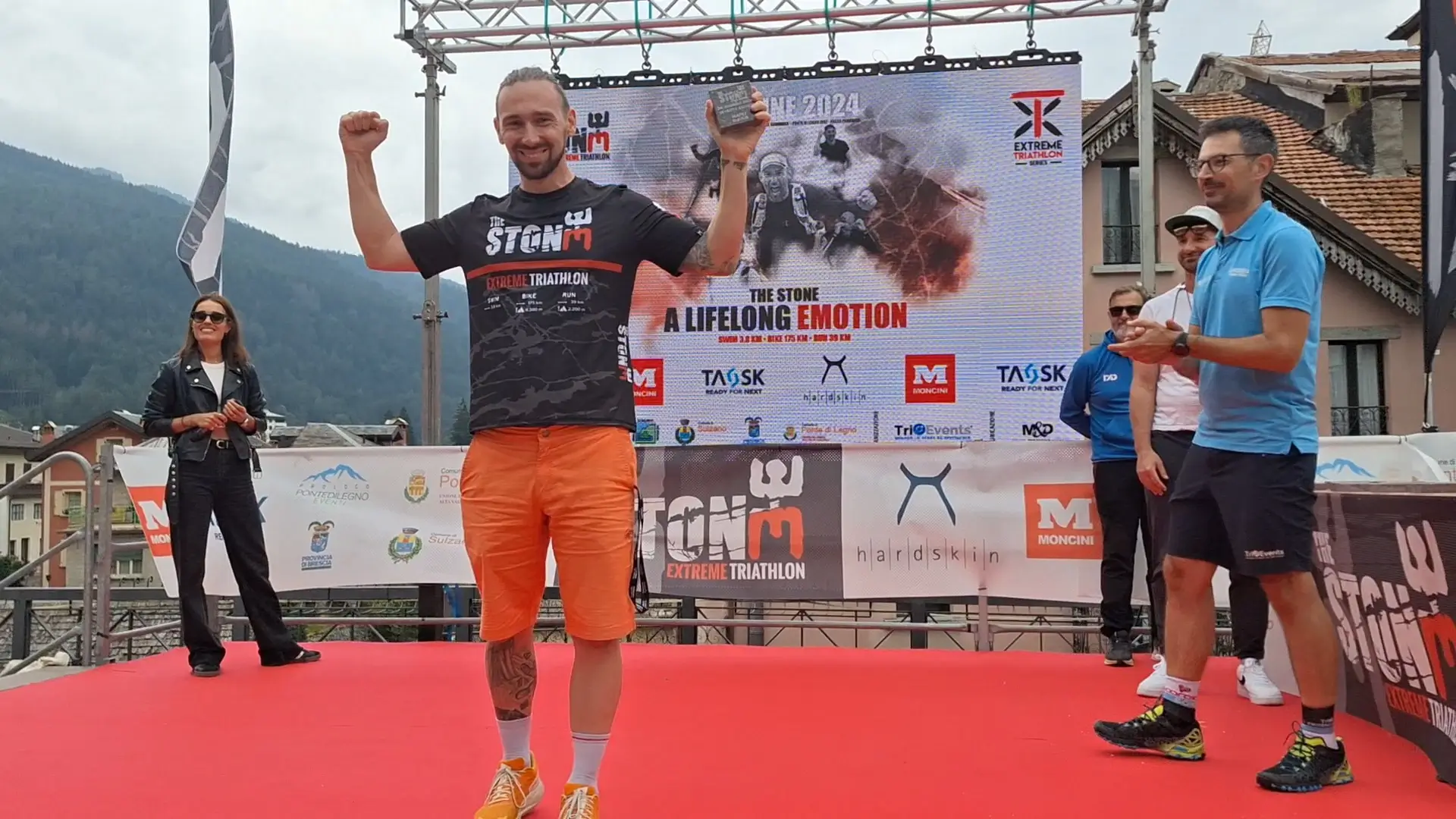
I’d say The STONE in Italy. That one was brutal. I underestimated my nutrition and mixed things I shouldn’t have… from around the 15th kilometer I couldn’t even run downhill. I just wanted to quit and head straight to the hotel. At the mandatory aid station around kilometer 23, I sat down, rested for about half an hour, and ate some real food — broth, bread, salami — and it actually helped my body a lot.
But there was another, much stronger opponent… the mind. Oh man, what a trickster that one can be. Luckily, I had a true warrior for finishing the race standing beside me — Martin Fábry — who drove away all the doubts and kept me going.
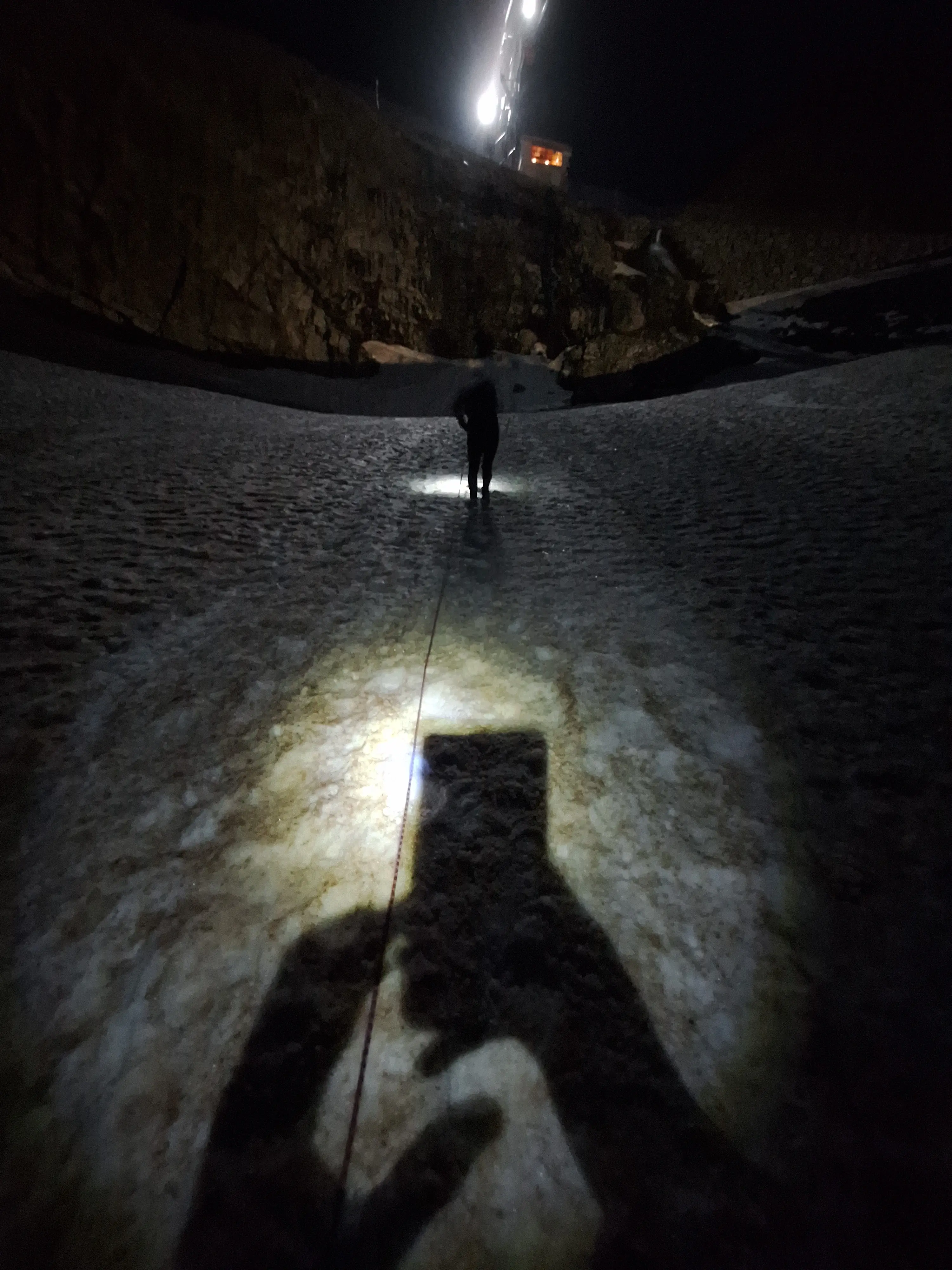
At the last checkpoint, about 5 km from the finish, I literally said I was done. My body could go, my mind could go, but on the final section there was so much snow that the organizers had to change the route. We were supposed to do the last 2 km on snow, up a black ski slope — something like climbing from Skalnaté Pleso to Lomnický Peak. I said, “No way, we don’t have crampons — we’re done.”
But the organizers insisted we could make it in our trail shoes; on the steepest parts they even set up ropes to help us pull ourselves upward. Martin told me I’d regret it if we quit when we were so close… and he was right.
We made it — in the dark, in the cold, on snow and ice — but we did it!
Thanks again, Martin, for not letting me give up.
Can you recall a moment when you thought you couldn’t go on? What helped you push through?
In those moments, the people around you are what really matter. That feeling might never come — or it might hit you three times in a single hour.
What has this sport given you outside of athletics — in your personal or professional life?
In my personal life, it gave me tremendous mental strength — and even when you think it’s over, there’s always a way to fight back.
Do you have a moment that you still carry with you as your most powerful experience?
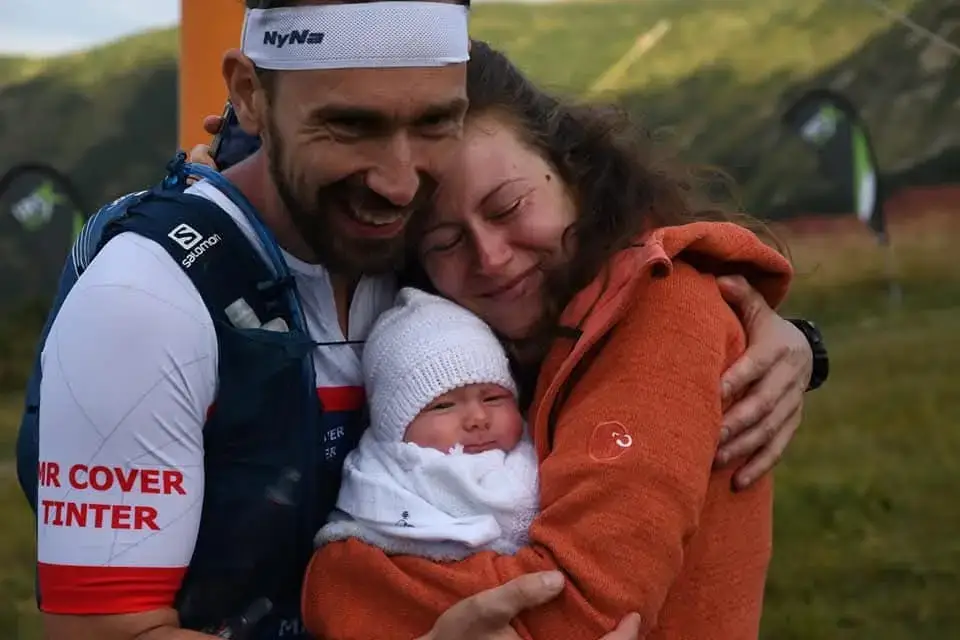
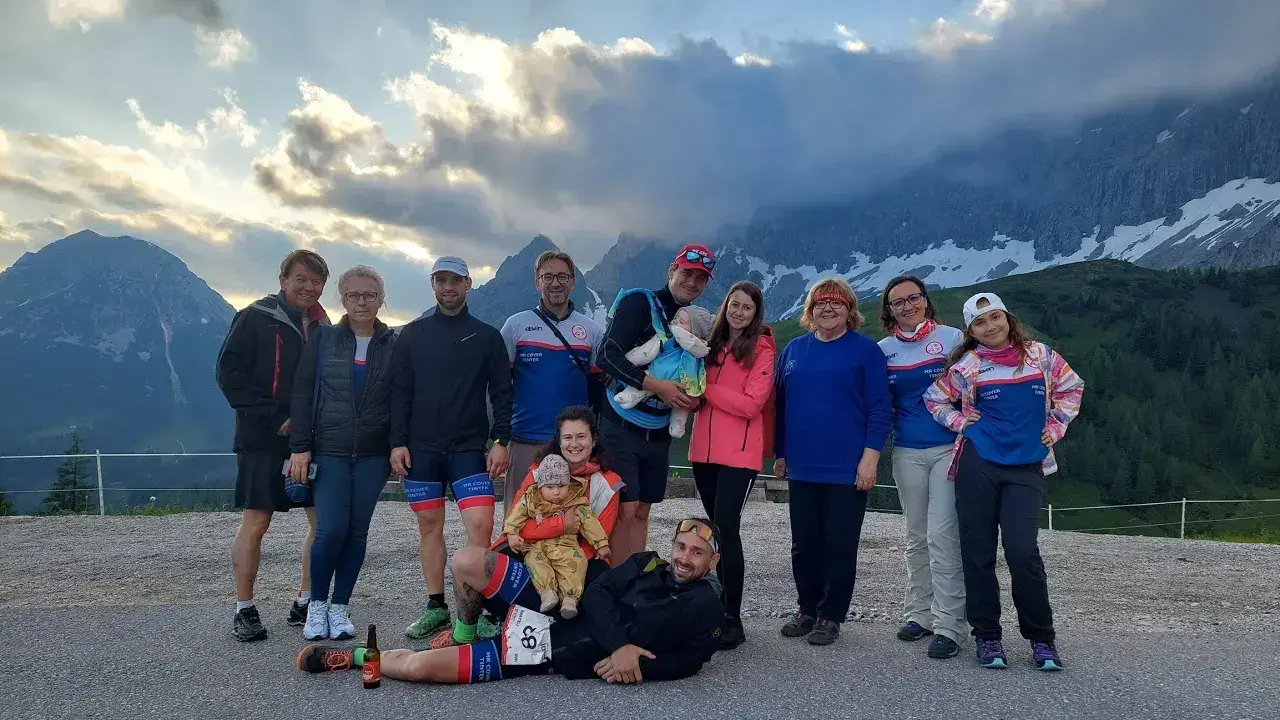
I have beautiful memories from every extreme triathlon, but the most special one is the finish of my first Jánošík — which was also my very first long-distance triathlon. At the finish line, my closest family was waiting for me, and as a bonus, they managed to bring my 7-week-old son all the way up to the top of Snilovské Saddle. … It was truly a powerful moment.
How did you cope with this season when you couldn’t compete to your fullest?
This season started off great — I felt strong, the kilometers were adding up, and my form was peaking toward the first triathlon of the season, PIRENE in Spain. And then came the pain in my left leg. At first, I took the usual approach — rest, relax, and the pain started to fade. So I tried to train lightly again… but the pain came right back.
That’s when the cycle began — doctor visits, examinations, and finally the verdict: a stress fracture somewhere near the femur and pelvis. Strict rest and a total ban on sports.
What was the most mentally challenging part for you?
I accepted the situation I was in and decided to obey the rules. I went to rehab and was just happy the pain was fading. The hard part didn’t come until my doctor finally gave me the green light to start training again. Classic story — I kept my training routine, just at lower intensity, and that’s when it all began. Chest pain, sweating like never before, exhaustion… I thought, this isn’t me — what’s going on?
I blamed hypoglycemia, so I started eating more to avoid it happening again. The weight piled on quickly, and training the way I used to was no longer possible. I tried one triathlon — the Xterra in Štiavnica — and it was heartbreaking. Hello, Matej, where are you? Where did you go? Are you really never coming back?
I know that if something breaks down over several months, it can’t be fixed in a week — it takes time. But this long? It felt endless. So I went back about ten years in progress, canceled all the races I had planned, and stopped putting pressure on myself. I just wish I’d realized that on the very first day my doctor told me I could train again.
How did you try to stay motivated?
For me, motivation is about staying healthy and full of life for as long as possible. I don’t need to focus on a specific race — I swim, run, and bike mainly because it brings me joy. I love going to races where I meet friends and familiar faces, joking around about who hasn’t swum or run lately, who was on sick leave just three days ago, and why they even showed up in the first place. It’s wonderful 😊
What are your plans for next year?
The plan is to stay healthy and try a few races.
Is Jánošík back on the table, or are you looking at other extreme races?
Jánošík is close to my heart — I want to go, but since our club member Miloš won it this year, I’m not sure if he won’t want to defend his title. We’ll see how the lineup looks. I’d also like to head to PIRENE in Spain, which I had to cancel this year because of my injury, and KNYSNA in South Africa is calling to me as well.
How would you inspire others?
Inspiration has to come from within. For me, movement as a whole is what matters — not just the three sports that make up triathlon. Football, hiking, climbing trees… all of that is easier because I take care of my body — both physically and mentally.
It doesn’t mean the world falls apart if I skip a training session or that I should eat only chicken and rice every day. Taking care of yourself also means going out for a burger and a beer, or playing firefighter with my son. Everything in life becomes easier when movement is a natural part of who you are — not just a training routine you have to follow.
What message would you give to athletes who are currently dealing with injuries or personal crises?
As it came, so it will go. Even someone who’s gained 20 kilos over the past three years won’t lose them in a week — it takes time. The form will return, and there will always be races next year. You might even prepare better for your specific ones, because you’ll have more time to train — and more experience, having taken the time to reflect on what your body was trying to tell you.
Why do you think it’s worth doing an extreme triathlon, even though you know it’s going to hurt?
Because...
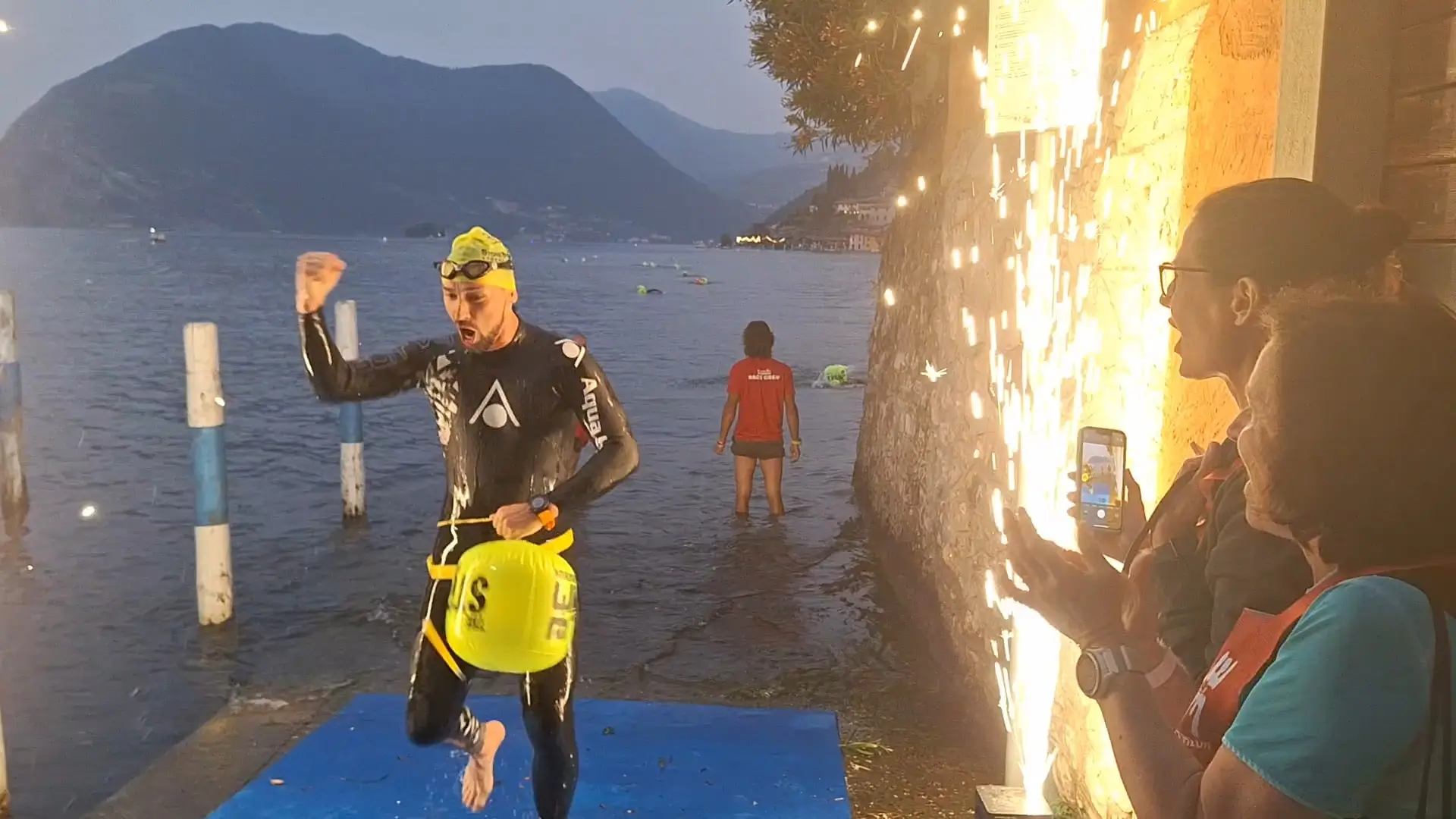
Imagine swimming 3.8 km in the dark, surrounded by a few other lunatics. Then you get on the bike — 180 km of experiences most people couldn’t even imagine — and after that, you try to run 42 km on what’s left of your strength, supported by your crew, in a landscape most people only admire on TV.
Extreme triathlon is almost impossible to describe in words… for me, it’s a mix of joy, determination, tears, regret, and humility.